
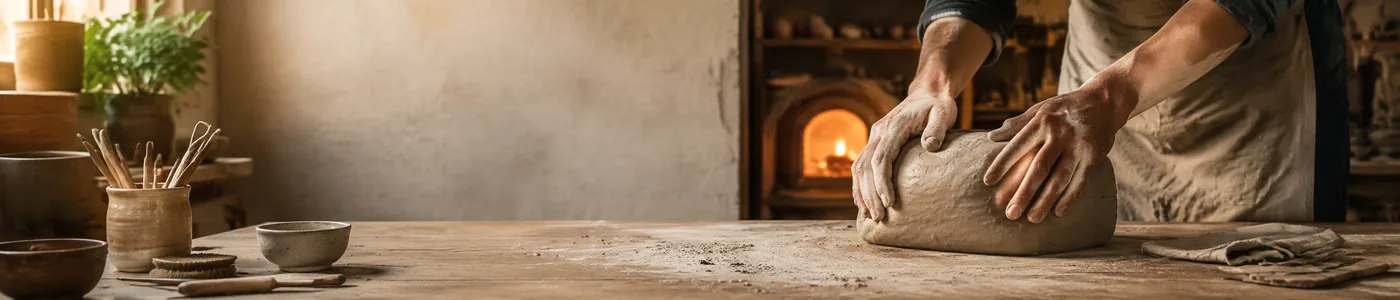
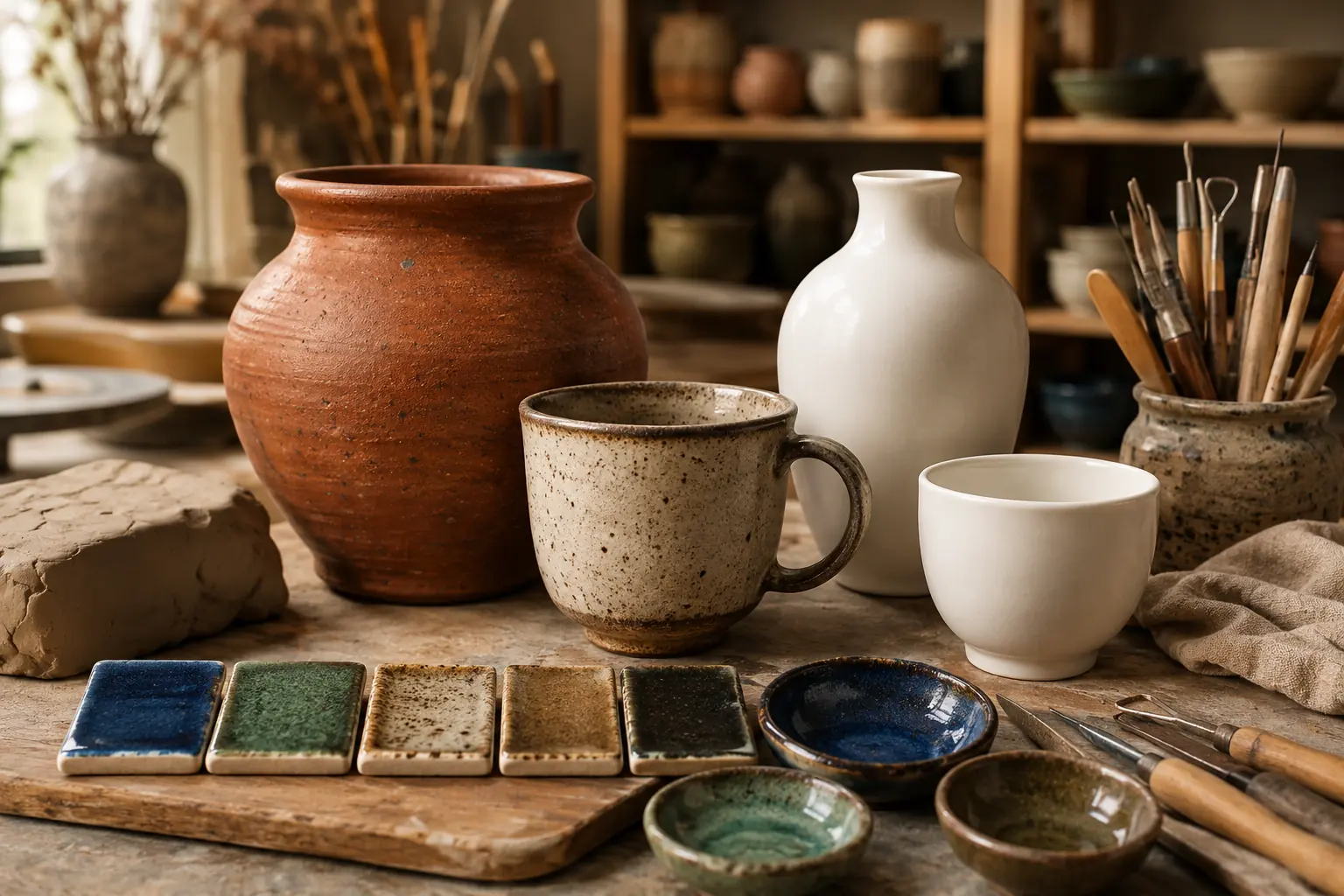
Every piece of pottery begins with something simple: clay.
Before the shaping, decorating, glazing, and firing, a potter must choose the right clay for the project. That decision affects almost everything about the finished piece, including its color, texture, strength, weight, appearance, and ability to hold food or liquids.
Although clay may look similar in its raw form, not every type behaves the same way. Some clays are soft and forgiving, making them ideal for beginners and decorative projects. Others require higher firing temperatures but produce exceptionally strong and durable pottery.
Understanding the main types of pottery clay can help you better appreciate the skill, planning, and creativity that go into every handmade ceramic piece.
What Is Pottery Clay?
Clay is a naturally occurring material made primarily from very fine mineral particles. When mixed with the right amount of water, it becomes soft and moldable. A potter can shape it by hand, form it on a pottery wheel, press it into a mold, or build it into larger sculptural forms.
Once the piece has dried, it is placed inside a kiln and fired at a high temperature. Firing permanently changes the clay. It removes moisture, strengthens the structure, and transforms the soft material into ceramic.
Different clay bodies contain different combinations of minerals and other materials. These ingredients determine how the clay feels while being worked and how it reacts inside the kiln.
The four most common categories are earthenware, stoneware, porcelain, and ball clay.
Earthenware Clay
Earthenware is one of the oldest and most widely used types of pottery clay. Ancient cultures used versions of earthenware to create cooking pots, storage containers, bricks, tiles, sculptures, and ceremonial objects.
It is typically fired at a lower temperature than stoneware or porcelain. Because it does not become completely waterproof during firing, earthenware pieces often need to be glazed when they will be used for food, drinks, or liquids.
Natural earthenware clay is often red, orange, brown, tan, or cream due to the presence of iron and other minerals.
Common Uses for Earthenware
Earthenware is frequently used for:
- Flowerpots and planters
- Decorative bowls and plates
- Tiles
- Sculptures and figurines
- Wall decorations
- Traditional pottery
- Hand-painted serving pieces
Terracotta is one of the best-known forms of earthenware. Its warm reddish-orange color makes it especially popular for planters, garden décor, tiles, and rustic home accessories.
Advantages of Earthenware
Earthenware is generally easy to shape and can be an excellent choice for beginners. It responds well to hand-building techniques and can accept bright, colorful glazes.
Its naturally warm color also gives finished pieces an earthy and traditional appearance.
However, earthenware is usually more porous and less durable than clay fired at higher temperatures. It may chip more easily and is not always suitable for outdoor use in freezing temperatures.
Stoneware Clay
Stoneware is a strong and versatile clay that is commonly used for functional pottery. It is fired at a higher temperature than earthenware, allowing the clay particles to bond more tightly together.
This process creates pottery that is dense, durable, and resistant to water.
Stoneware clay can range in color from light gray and creamy white to brown, buff, or nearly black. Its natural appearance often works especially well with rustic, earthy, or handmade designs.
Common Uses for Stoneware
Stoneware is often used to create:
- Coffee mugs
- Dinner plates
- Serving bowls
- Baking dishes
- Pitchers
- Storage containers
- Vases
- Soap dishes
- Kitchen crocks
Because of its strength, stoneware is a popular choice for pottery that will be handled and used regularly.
Advantages of Stoneware
Stoneware provides an excellent balance between beauty and durability. It can be shaped on a pottery wheel or used for hand-built designs, and it works with a wide variety of glazes and decorative techniques.
When properly made and fired, stoneware can be suitable for food, beverages, dishwashers, microwaves, and ovens. The exact care requirements depend on the clay, glaze, construction, and firing method used by the artist.
Stoneware is sometimes heavier than porcelain, but many people appreciate its substantial feel and natural character.
Porcelain Clay
Porcelain is known for its smooth texture, light color, and refined appearance. It is usually made with a high percentage of kaolin, a fine white clay that contains relatively few impurities.
Porcelain is fired at very high temperatures. When properly fired, it becomes strong, dense, and sometimes slightly translucent when made thin enough.
Its clean white surface provides an excellent background for detailed painting, delicate patterns, and carefully controlled glaze effects.
Common Uses for Porcelain
Porcelain is commonly used for:
- Fine dinnerware
- Teacups and saucers
- Decorative vases
- Jewelry
- Sculptures
- Ceramic ornaments
- Bathroom fixtures
- Artistic display pieces
Advantages and Challenges of Porcelain
Porcelain can produce exceptionally beautiful and elegant pottery. Its smooth surface allows for crisp details, and its light color helps glazes appear clean and vibrant.
However, porcelain can be more challenging to work with than earthenware or stoneware. It may feel less forgiving on the pottery wheel and can become soft or lose its shape when too much water is used.
It also requires careful drying and firing. Small differences in thickness or moisture can lead to warping or cracking.
For experienced potters, these challenges are part of porcelain’s appeal. The finished results can be delicate in appearance while remaining surprisingly strong.
Ball Clay
Ball clay is a very fine, highly plastic clay. In pottery, the word “plastic” refers to how easily clay can be shaped without cracking.
Ball clay is rarely used by itself because it can shrink significantly during drying and firing. Instead, it is usually added to other clay bodies to improve their strength, flexibility, and workability.
It is commonly included in stoneware, porcelain, and commercial ceramic mixtures.
Although customers may not see the term “ball clay” on a finished product, it often plays an important supporting role in making that product possible.
What Is a Clay Body?
Potters do not always use clay exactly as it is found in nature. Instead, manufacturers and ceramic artists may combine several types of clay with materials such as silica, feldspar, grog, or sand.
This prepared mixture is called a clay body.
A clay body can be formulated for a specific purpose. Some are designed for pottery wheels, while others are intended for hand-building, sculpture, slip casting, or outdoor installations.
For example, grog may be added to clay to give it more structure. Grog is made from ceramic material that has already been fired and then ground into particles. It can reduce shrinkage and help larger pieces hold their shape.
The texture of grogged clay may feel rougher, but that texture can become an intentional part of the finished design.
How Clay Affects Glaze
Clay and glaze must work together.
A glaze is a glass-like coating applied to pottery before its final firing. During firing, the glaze melts and bonds to the ceramic surface.
The same glaze can look completely different depending on the clay beneath it. A glaze placed over white porcelain may appear bright and clean, while the same glaze over dark stoneware may look deeper, warmer, or more muted.
Iron and other minerals in the clay can interact with glaze ingredients, creating color variations, speckles, movement, and unexpected patterns.
Potters must also match the glaze to the clay’s firing temperature. A low-fire glaze cannot simply be used under high-fire conditions, and a high-fire glaze may not melt properly at a lower temperature.
The clay and glaze also need compatible expansion rates. If they expand and contract too differently during heating and cooling, the glaze may crack, flake, or separate from the pottery.
Choosing the Right Clay
There is no single type of clay that is best for every project.
A potter may choose earthenware for a brightly painted decorative piece, stoneware for a durable coffee mug, or porcelain for a delicate vase. A sculptor working on a large piece may select a heavily grogged clay that provides additional support.
The choice depends on several factors:
- How the piece will be used
- How it will be shaped
- The desired color and texture
- The firing temperature
- The type of glaze being applied
- Whether the pottery will be decorative or functional
- The artist’s experience and preferred working style
Even two pieces made from the same clay can turn out differently because of changes in thickness, glaze application, kiln placement, firing temperature, and cooling conditions.
These variations are part of what makes handmade pottery unique.
The Beauty of Handmade Ceramics
Pottery is a partnership between the artist and the materials.
The potter shapes the clay, but the clay also influences the design. It stretches, compresses, dries, shrinks, and reacts to heat. Glazes may flow, overlap, break across textured surfaces, or reveal colors that were not visible before firing.
A handmade ceramic piece may contain slight differences in shape, color, texture, or glaze coverage. These are not necessarily imperfections. They are evidence of the process and part of the character that separates handmade pottery from mass-produced products.
From rustic earthenware planters to durable stoneware mugs and elegant porcelain bowls, each type of clay offers something special.
The next time you hold a handmade ceramic piece, take a moment to notice its weight, texture, surface, and color. Beneath the glaze is a carefully selected clay body that helped transform a simple natural material into a lasting work of art.